Education
Building education apps kids actually reopen
Math games for kids and an alphabet game for ages 4 to 7: how FastyFacts and Fasty Letters use adaptive practice, encouragement, and short sessions.
App Store
1 / 10
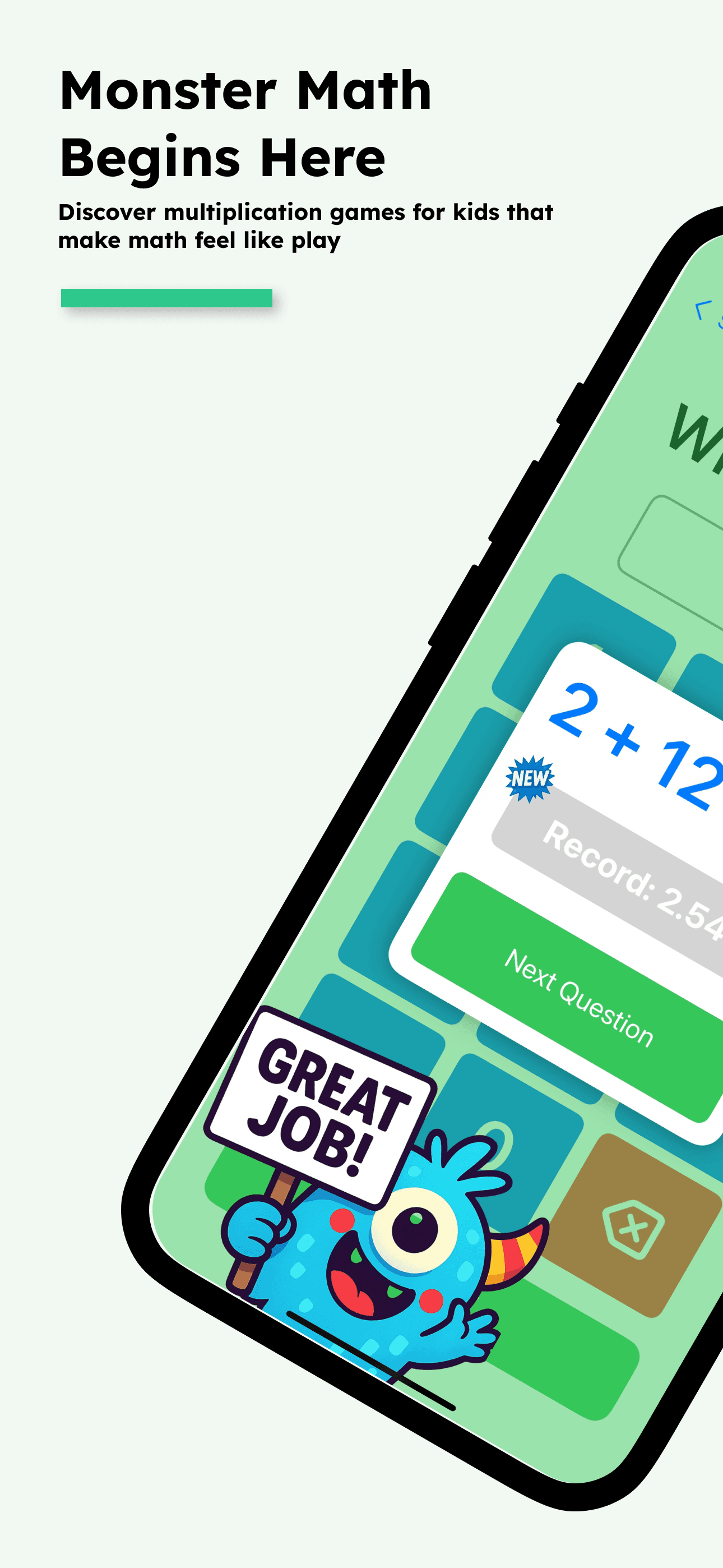
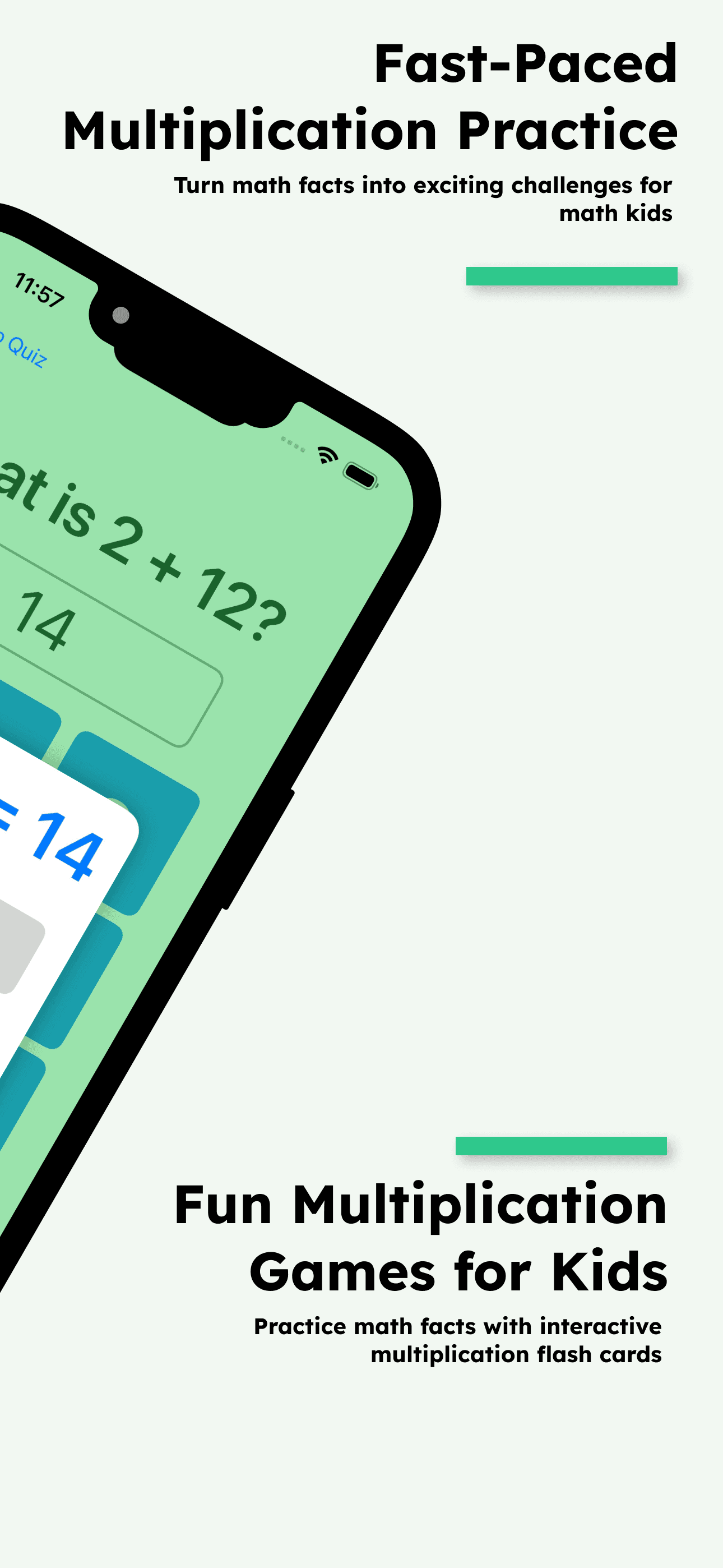
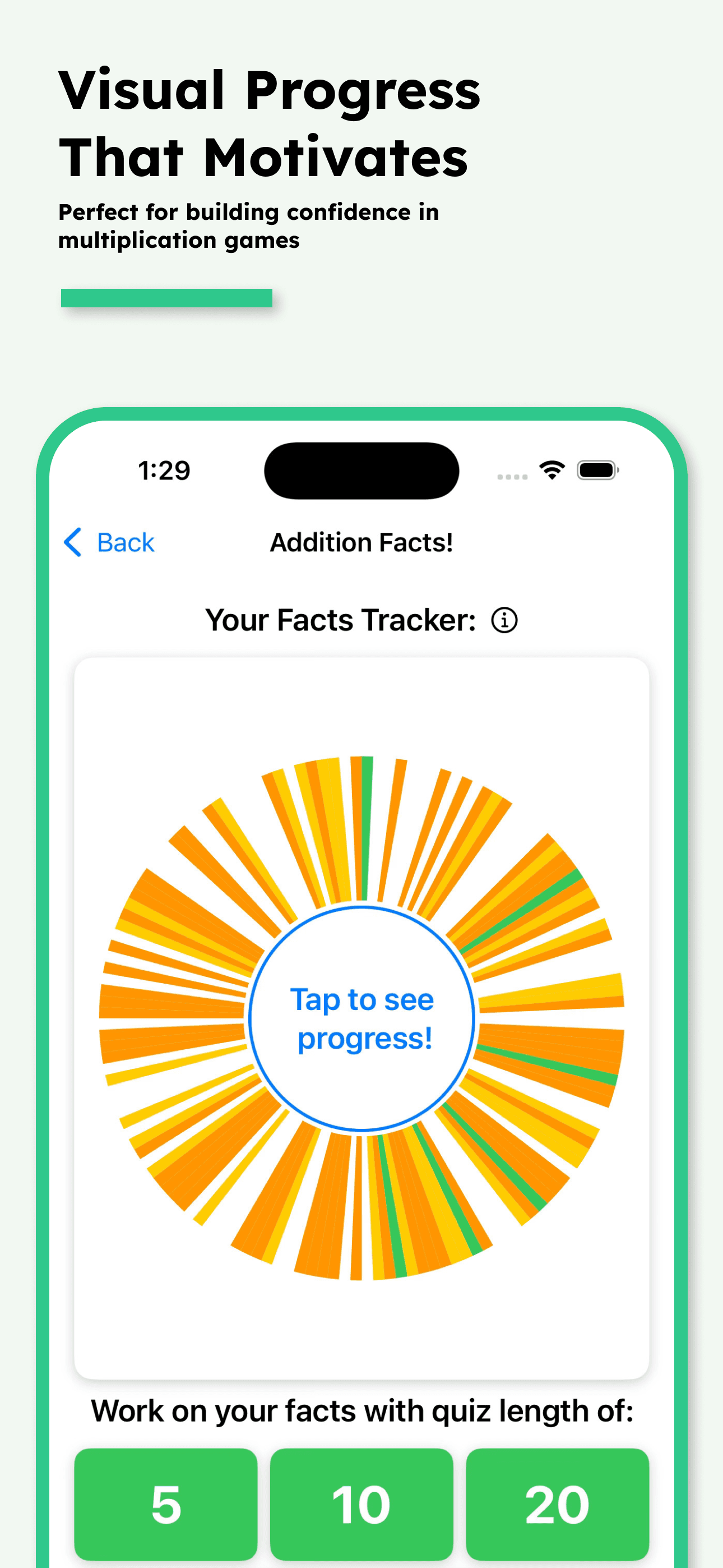
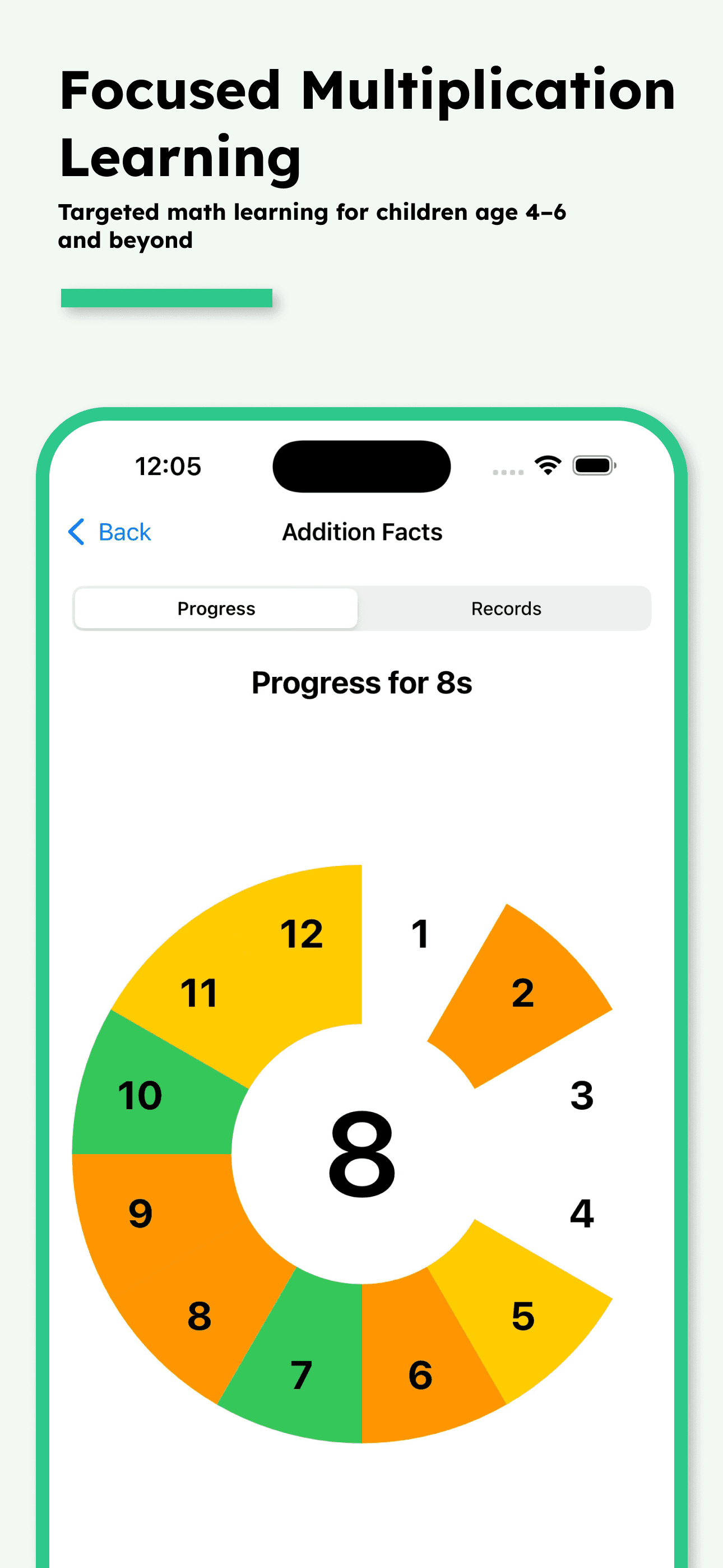
FastyFacts, Monster Math Begins Here, screenshot 1 of 10
A lot of education apps feel like homework with a mascot. FastyFacts and Fasty Letters are iOS learning games from Swizzle Works, and the bet is simpler than that: a short round should be worth opening again. One is a math facts game. The other is an alphabet game for ages 4 to 7. Both work offline.
FastyFacts is a math game for kids who need fact fluency, not another worksheet. It pairs multiplication flash cards with a monster coach, and it also reviews division, addition, and subtraction. Times tables run from 2×2 through 12×12. That is the set most 2nd and 3rd grade classrooms still drill, and it is still the right set when one table is shaky later on.
Adaptive learning is what keeps a round from feeling random. Miss a fact and it comes back later. The level stays hard enough to grow, and it does not keep drilling facts a child already knows. A round can be 5, 10, or 20 questions, so it fits a kitchen-table warm-up or a longer sitting after school.
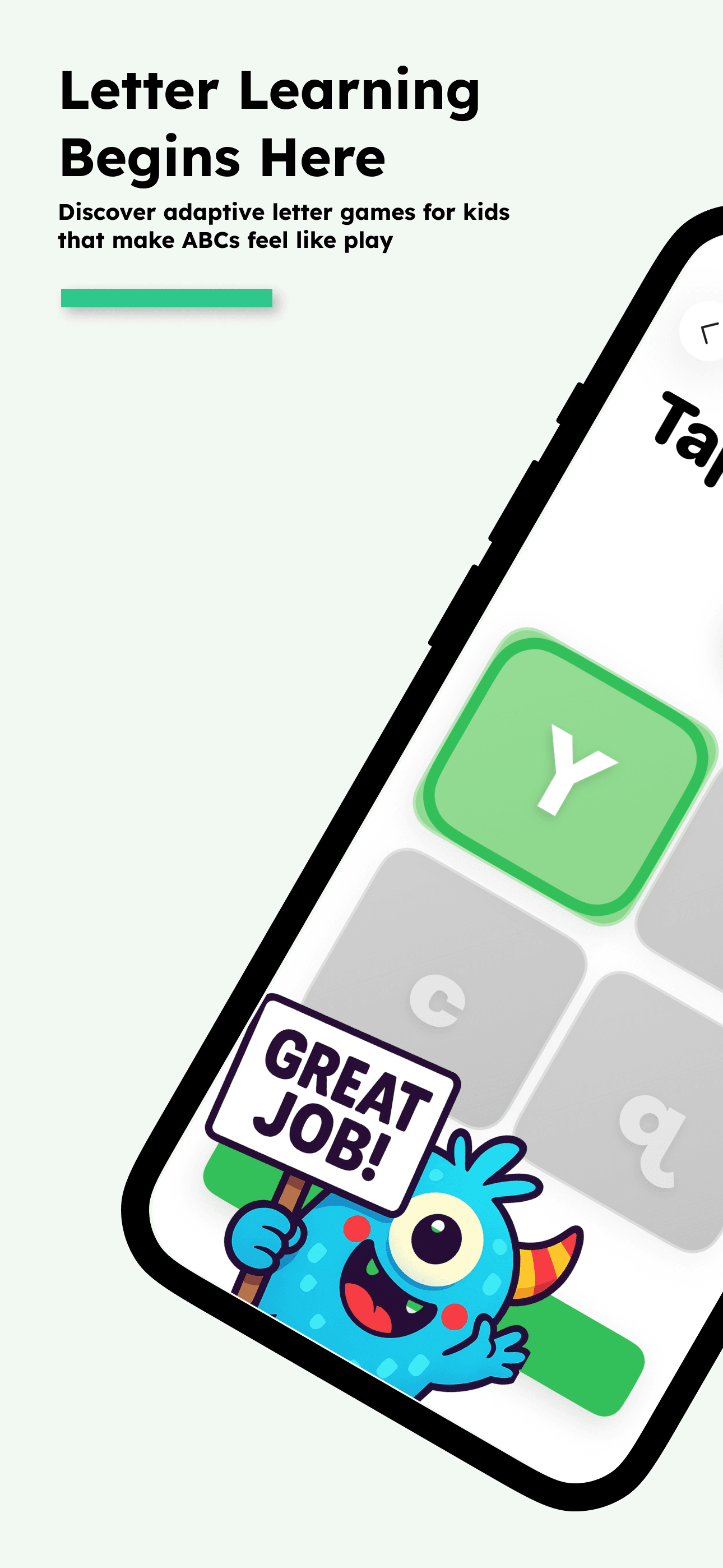
Kids reopen it because the educational game loop is fast. A friendly Fasty monster holds up a Great Job sign, rewards land between questions, and audio guidance helps a younger player when the prompt is more than they can read. You answer, you see the record, you hit Next Question. That is the session.
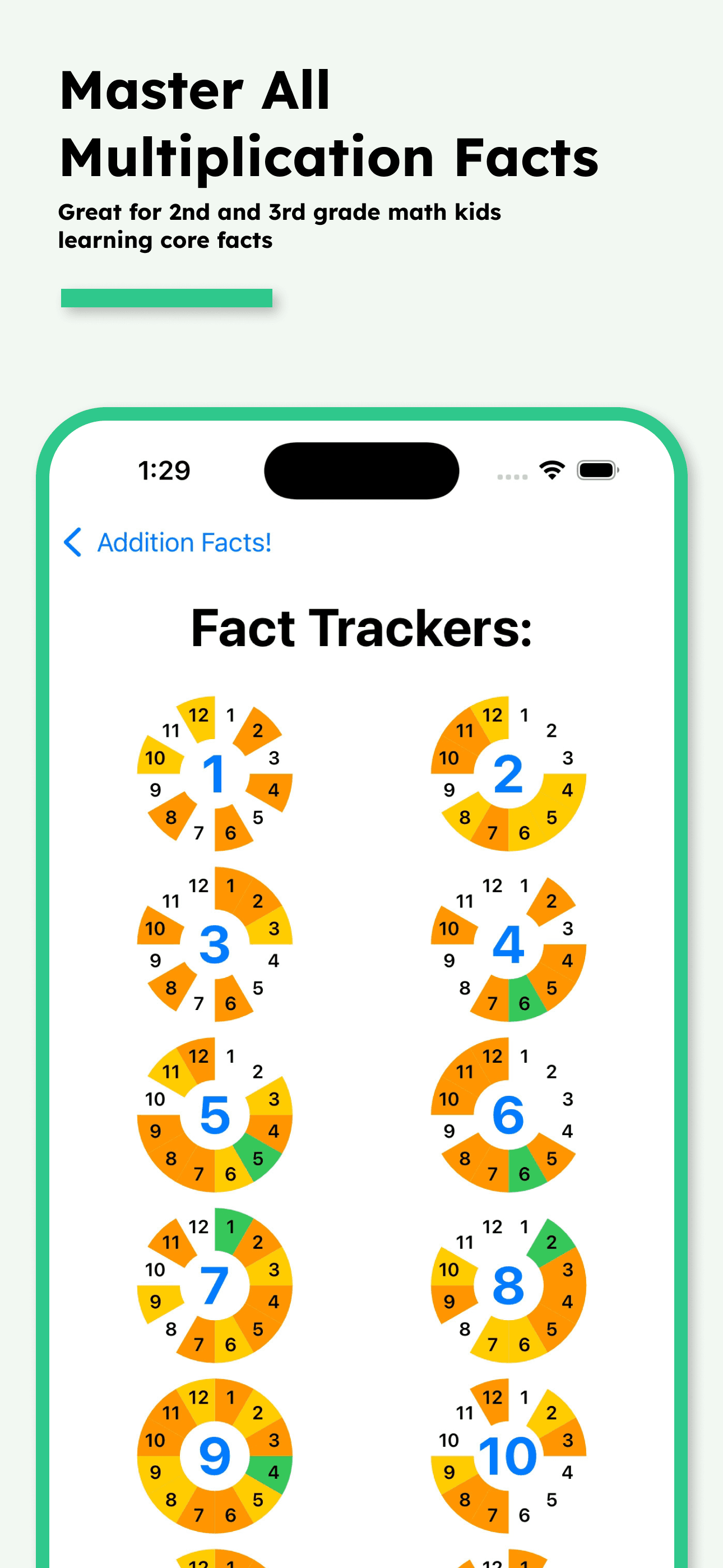
Parents and teachers get the other half: progress tracking and reports. Fact tracker rings show which tables are solid and which still need work, down to one set like the 8s. Homeschool math, a classroom warm-up before the lesson, a learning center, or extra support after school can all use the same view. You can see growth without sitting through every round.
Offline play is the practical benefit. Car rides, waiting rooms, and travel do not need a network connection once FastyFacts is on the phone. Practice rounds have no ads. It is free on the App Store for iOS.
Fasty Letters is the early learning app beside it. It is an ABC game for kids ages 4 to 7, the pre-K and kindergarten window, not a times tables game. The job is to learn letters: the name, the uppercase shape, and the lowercase shape. It does not teach letter sounds or handwriting. If you want multiplication games for kids, stay with FastyFacts.
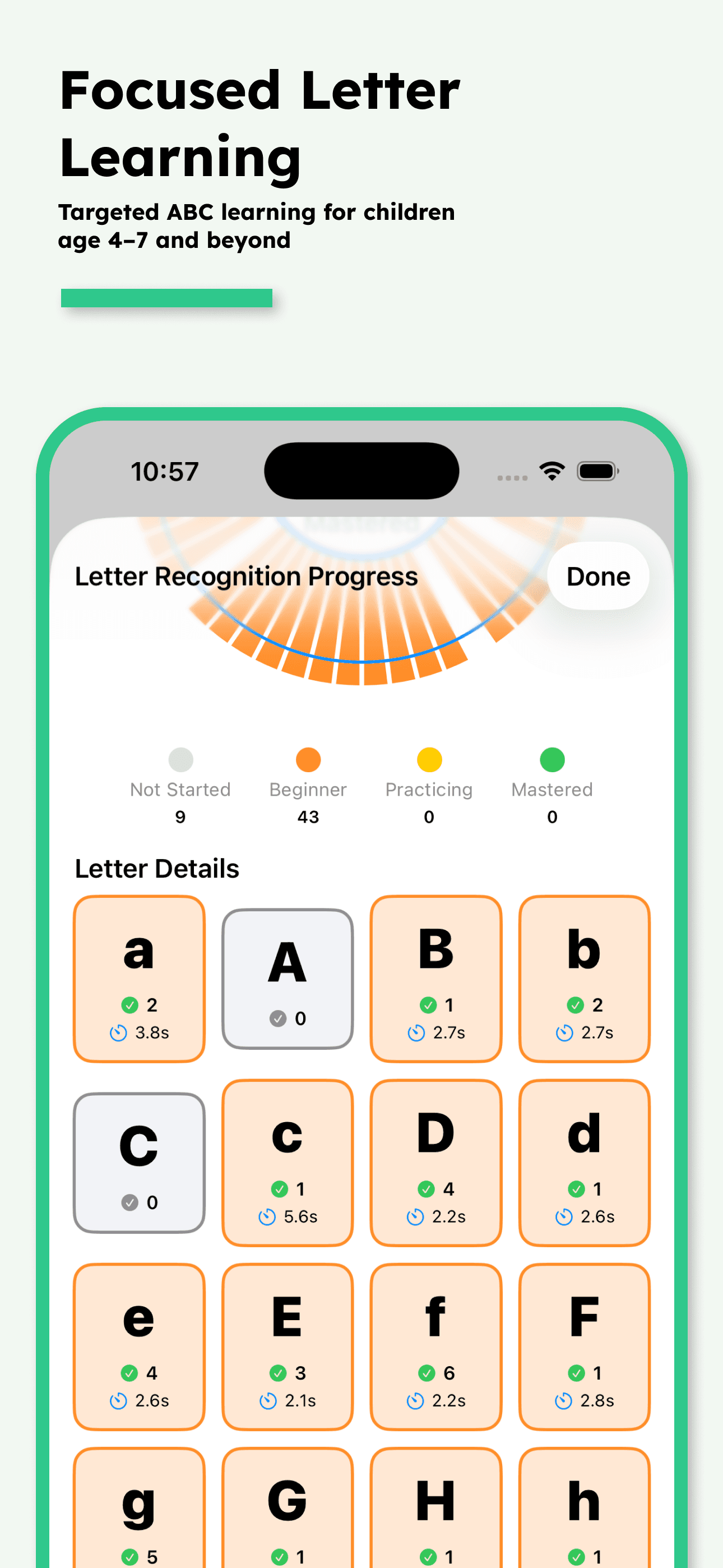
This alphabet game does not march A to Z at random. It watches the letters a child misses and brings those letters back every third question. Letter recognition gets more practice where it is weak. A child who already knows B does not spend the round proving it.
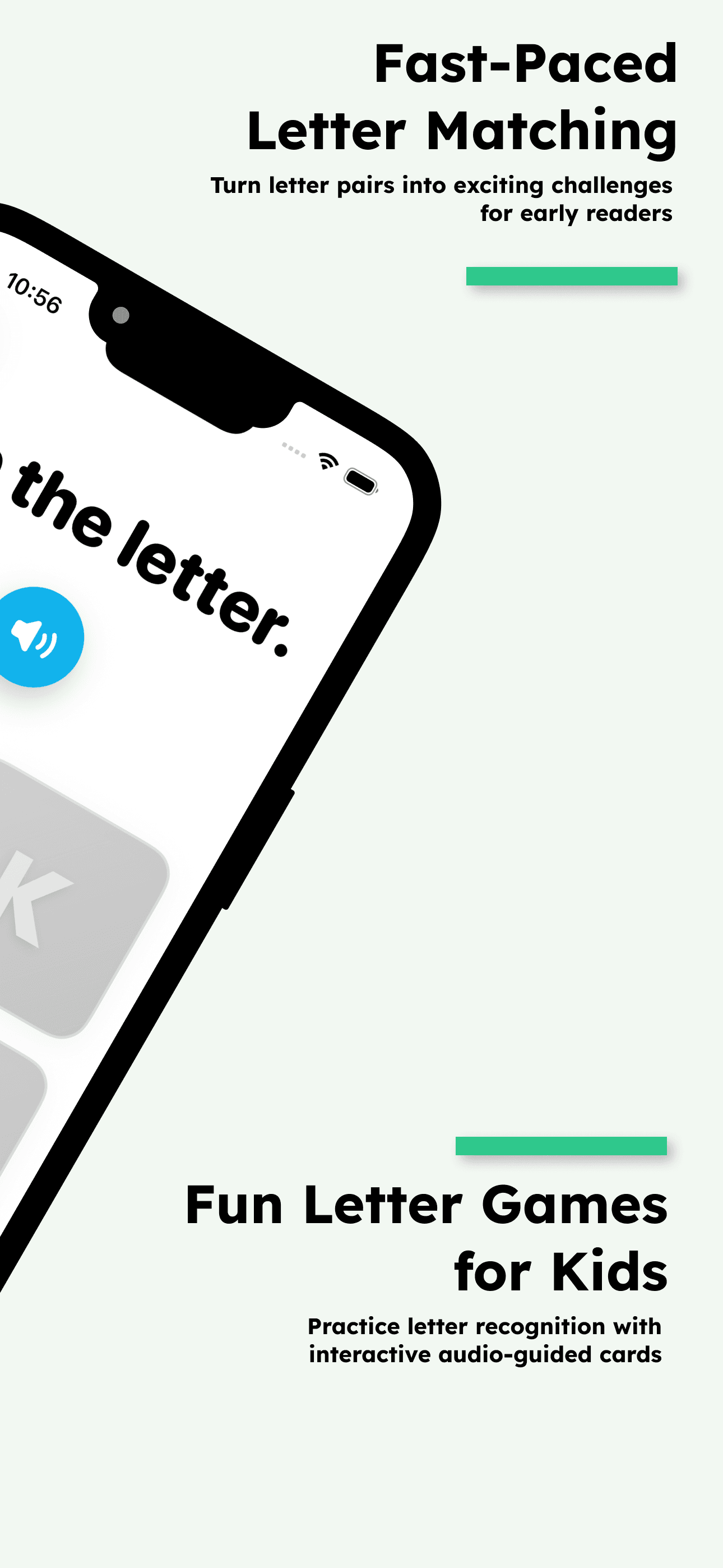
Two modes split the work. Letter Match is the letter matching game: pair the uppercase and lowercase forms. Letter Recognition says the letter name out loud, uppercase B, and asks the child to tap it. Cards are large, audio plays on every prompt, and haptics still fire if the phone is muted. Monster celebrations close a round, so independent play does not need an adult narrating every tap.
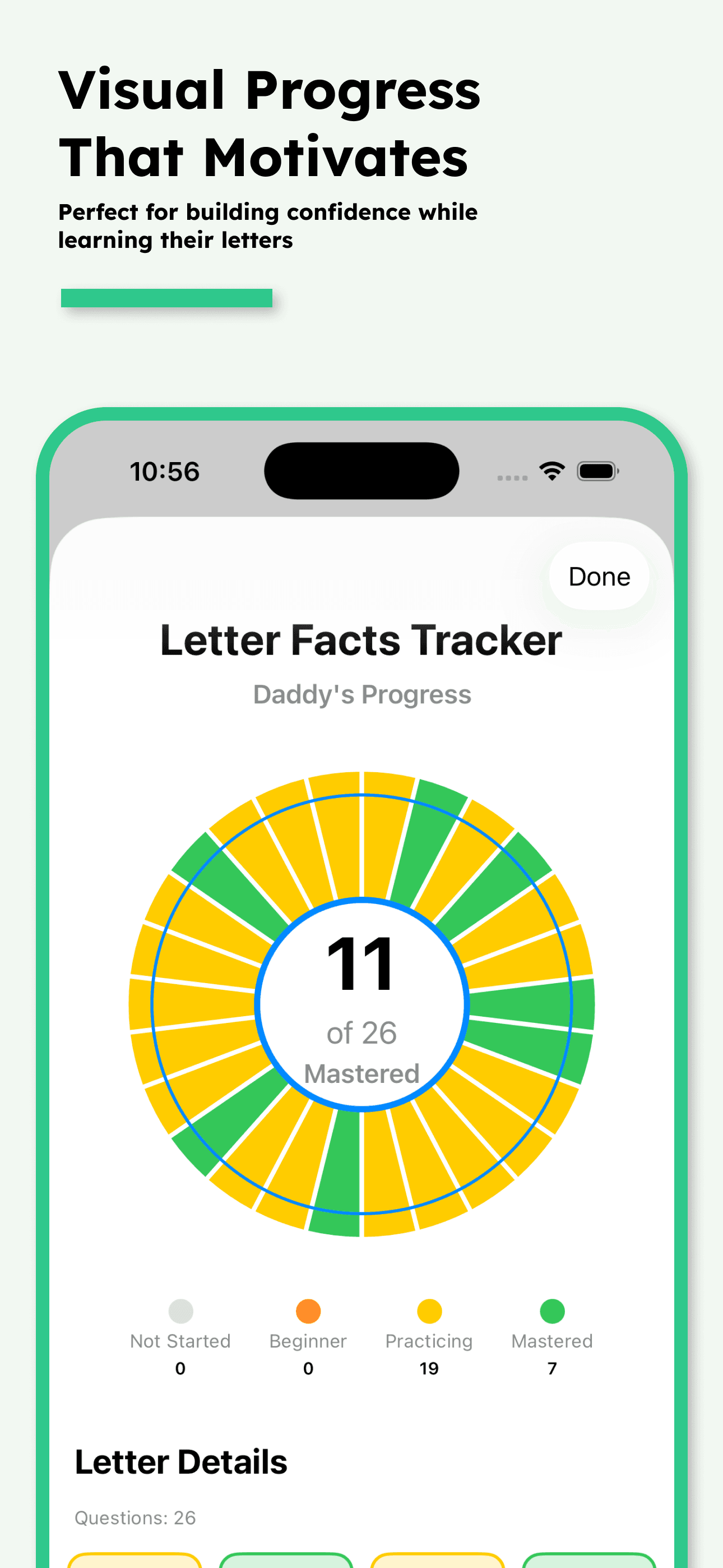
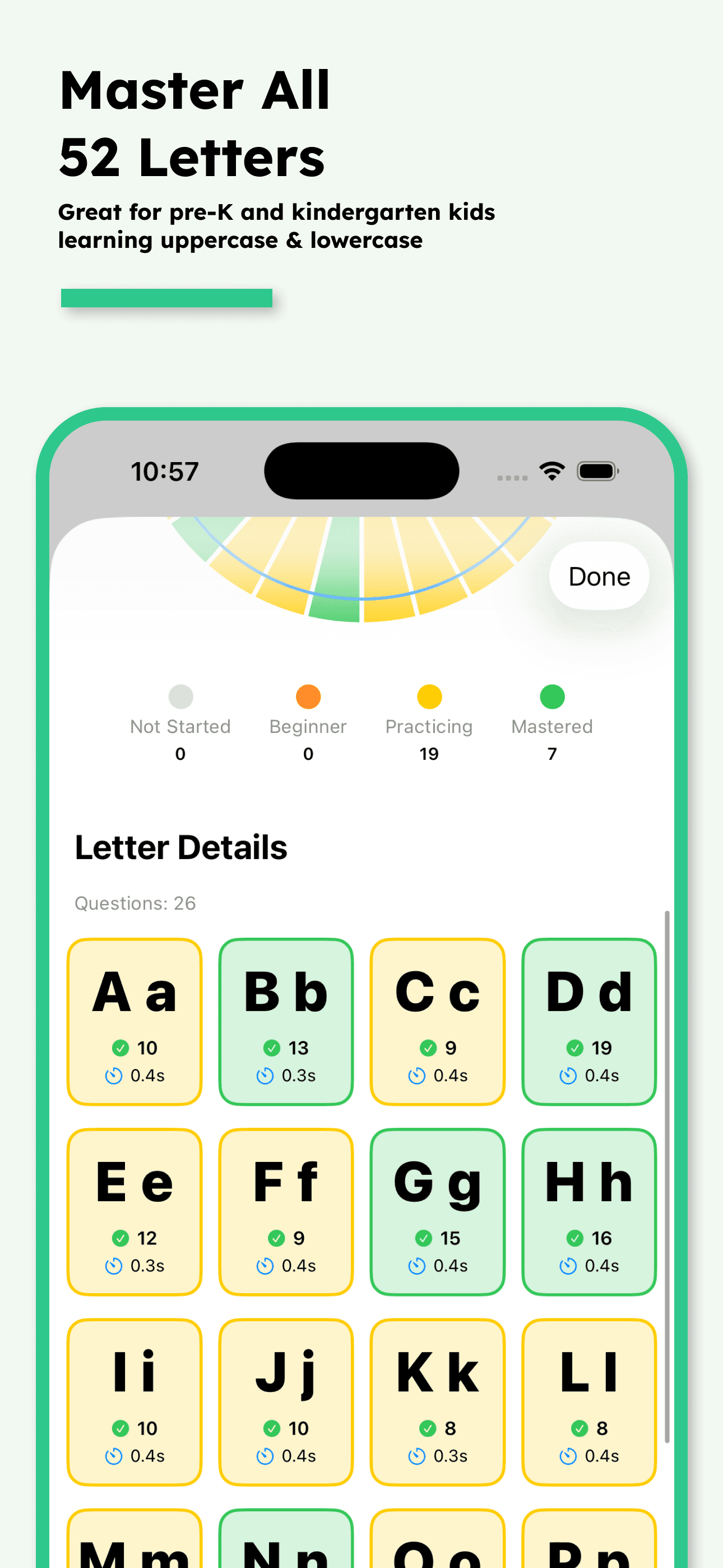
The mastery dashboard is what adults look at. Donut charts, an A to Z grid, and per-letter accuracy sort letters into not started, beginner, practicing, and mastered. Up to four profiles stay on one device. A caregiver can see that 11 of 26 letters are mastered, or open the full set of 52 uppercase and lowercase cards, without guessing from the last session.
The safety benefit is blunt. Fasty Letters has no ads, no in-app purchases, and no social features. Gameplay does not need the internet. Profile data stays on the device. For a preschool letters app, the session stays short and nothing in the round is selling the next thing.
Pick by the skill. FastyFacts is the math facts practice app: multiplication, times tables, and the other operations, with reports for the adult in the room. Fasty Letters is the early literacy app: alphabet games, ABC practice, and letter recognition for ages 4 to 7. The choosing guide on this blog lines both of them up next to Onword if a word puzzle is the thing you actually wanted.
Frequently asked questions
What math facts does FastyFacts practice?
Multiplication flash cards from 2×2 through 12×12, plus division, addition, and subtraction review. A round can be 5, 10, or 20 questions. If a fact is missed, it comes back later.
Who is FastyFacts for?
Parents, teachers, and homeschool families who want math games for kids that get reopened. It fits after-school fact practice, a classroom warm-up, a learning center, or extra support. Progress tracking and reports show which times tables are sticking.
What ages is Fasty Letters for?
Ages 4 to 7. That is pre-K and kindergarten letter practice: letter names and the uppercase and lowercase shapes. It does not teach letter sounds, tracing, or blending. It is an alphabet game, not a times tables app.
What is the difference between Letter Match and Letter Recognition?
Letter Match asks kids to pair uppercase and lowercase letters. Letter Recognition plays the letter out loud and asks them to tap it. Both modes use large cards and audio, built for little hands.
Do FastyFacts and Fasty Letters work offline?
Yes. Both kids learning apps run without a network connection, which covers car rides, waiting rooms, and travel. They are on the App Store for iOS.
Does Fasty Letters have ads or in-app purchases?
No. Fasty Letters has no ads, no in-app purchases, and no social features. Up to four profiles stay on the device. FastyFacts practice rounds have no ads either.
What are the best practice methods for math facts?
Short rounds, recall from memory, and a second look at the miss. If 7×8 is wrong, that fact should come back later, while facts a child already knows drop back. Mix multiplication with division, addition, and subtraction, and keep a session to 5, 10, or 20 questions so it still gets finished. An adult should see which times table is weak, like the 8s, and send practice there. FastyFacts is built on those best practice methods for math facts: adaptive multiplication flash cards, a monster coach so the round gets reopened, and progress reports for parents and teachers. The fact fluency guide and the how to teach times tables guide on this site walk through the method in more detail.
What are the best practice methods for letter practice?
Practice the letters that slip, and pair the name with both shapes. A random pass through the alphabet spends time on letters a child already knows. Better letter practice brings the weak ones back often. In Fasty Letters that is every third question. Letter Match pairs uppercase and lowercase. Letter Recognition says the letter name and asks for a tap. Keep the cards large, the round short, and check the mastery grid so the next session starts on letters that are still beginner or not started. Letter sounds are the next job after names, and the letter names and sounds guide on this site covers which tools do that. The letter recognition guide walks through the practice rule in more detail.